Journal
Pre-Launch vs Ready-to-Move: What Smart Buyers Prefer in 2026
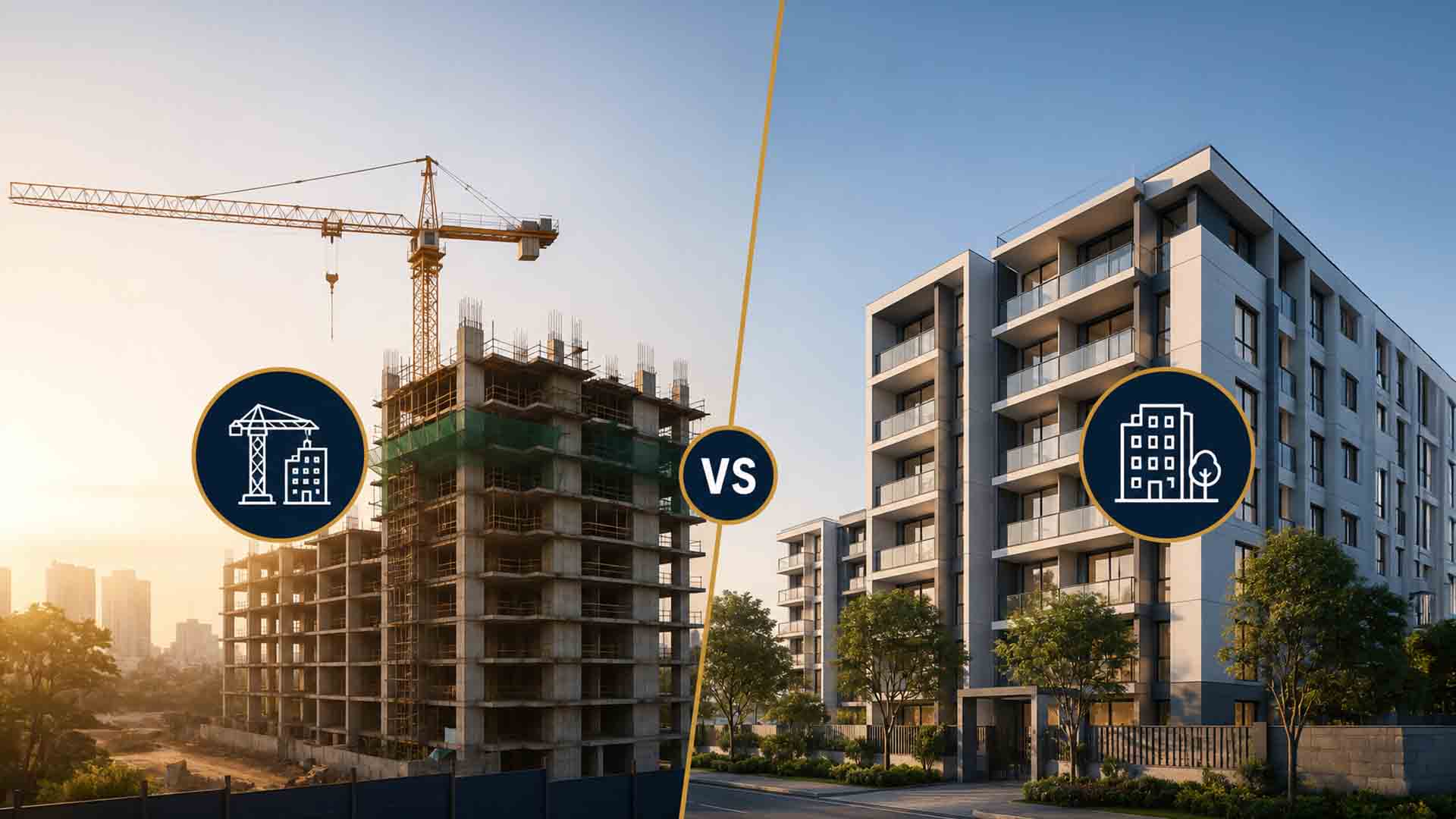
Why the gap between “early pricing advantage” and “certainty premium” has become sharper in Pune real estate For years, the standard real estate advice in Pune was simple: “Buy at pre-launch. Exit before possession.” In earlier market cycles, that strategy often worked. Buyers entered projects at lower prices, benefited from construction-linked appreciation, and gained from rapid infrastructure growth around emerging corridors. But Pune’s residential market in 2026 behaves very differently from
- Published
- Category
- Buyer's Guide
- Reading time
- 5 min 5 min read
Contents10
Why the gap between “early pricing advantage” and “certainty premium” has become sharper in Pune real estate
For years, the standard real estate advice in Pune was simple:
“Buy at pre-launch. Exit before possession.”
In earlier market cycles, that strategy often worked. Buyers entered projects at lower prices, benefited from construction-linked appreciation, and gained from rapid infrastructure growth around emerging corridors.
But Pune’s residential market in 2026 behaves very differently from the market of 2016.
Today’s buyers are more cautious, more informed, and far more focused on execution quality. Rising construction costs, tighter RERA compliance, delayed infrastructure timelines, and changing end-user expectations have fundamentally altered how people evaluate under-construction versus completed homes.
The result is a growing divide between:
- buyers prioritising price advantage, and
- buyers prioritising certainty and livability
At 3 Works Properties, we increasingly see that the “better” choice depends less on the project stage and more on the buyer’s actual objective.
Why Pre-Launch Still Attracts Buyers
Despite market evolution, pre-launch projects continue attracting significant demand for one major reason:
Entry Pricing Advantage
Developers typically introduce projects at lower prices during initial phases to:
- improve early sales velocity
- secure construction momentum
- generate financing confidence
In strong growth corridors, this pricing difference can be meaningful over a multi-year horizon. For example, infrastructure-driven markets around Metro expansion zones or emerging Ring Road corridors often see buyers entering early in anticipation of future connectivity improvements. As explored in Upcoming Pune Ring Road infrastructure visibility still plays an important role in early-stage buyer confidence.
But the 2026 Buyer Is No Longer Blindly Speculative
What has changed is the buyer profile. Between 2015 and 2020, many investors entered projects based primarily on launch price and brochure projections. In 2026, buyers are significantly more execution-focused because the market has seen:
- delayed possessions
- shifting project timelines
- changing developer priorities
- infrastructure announcements taking longer than expected
As a result, buyers now evaluate:
- construction progress
- developer delivery history
- funding strength
- inventory absorption
- surrounding infrastructure readiness
rather than launch pricing alone.
Why Ready-to-Move Properties Are Gaining Momentum
One of the strongest shifts in Pune’s premium market is the growing preference for completed or near-completion inventory.
The reason is simple:
certainty now carries a premium.
With ready-to-move homes, buyers can immediately evaluate:
- actual layout efficiency
- natural lighting
- construction quality
- neighborhood activity
- traffic flow
- views and ventilation
There is no dependency on future promises. This is particularly relevant in established micro-markets such as Koregaon Park and Kalyani Nagar, where buyers increasingly prioritise finished inventory over speculative redevelopment launches.
This trend is already visible in:
The Financial Difference Is No Longer Just About Price
Earlier, pre-launch investing was mostly viewed through a simple equation:
- lower entry cost
- higher appreciation potential
But in 2026, holding costs matter much more. Under-construction purchases may involve:
- ongoing rent + EMI overlap
- delayed possession risk
- rising fit-out costs
- interest rate uncertainty
- GST impact (where applicable)
Meanwhile, ready homes provide:
- immediate usability
- rental income potential
- faster occupancy
- operational certainty
This changes the real financial comparison substantially.
End-Users and Investors Now Prefer Different Formats
The divide between end-user and investor behavior is becoming sharper. As discussed in End Users vs Investors buyers driven by livability priorities increasingly lean toward:
- completed homes
- established neighborhoods
- operational ecosystems
Meanwhile, investors with longer holding periods may still prefer:
- early-stage launches
- infrastructure-led corridors
- lower entry pricing opportunities
Neither strategy is universally correct. The suitability depends entirely on timeline and risk tolerance.
Infrastructure Timing Has Become Critical
One of the biggest lessons from recent years is that infrastructure execution timing directly impacts under-construction investments.
For example:
- Metro-linked projects in West Pune saw strong early momentum
- However, appreciation became more selective as buyers waited for actual operational progress
As explored in the Pune Metro Line 3 today’s market rewards projects aligned with visible execution rather than distant announcements.
This has made buyers more selective about entering extremely early-stage launches.
The Rise of “Near-Completion Premium”
An interesting 2026 trend is the increasing demand for projects that are:
- structurally complete
- nearing handover
- already visibly operational
These projects often strike a balance between:
- lower risk
- moderate appreciation potential
- reduced uncertainty
Buyers are increasingly willing to pay slightly higher prices for this middle ground because it reduces execution anxiety while still allowing some upside.
What Smart Buyers Actually Prioritise in 2026
Sophisticated buyers are no longer choosing purely between:
- “cheap”, or
- “expensive”
Instead, they are evaluating:
- certainty
- time horizon
- liquidity
- developer credibility
- surrounding ecosystem maturity
- future supply competition
This shift reflects Pune’s broader transition from speculative volume buying toward more value-conscious decision-making.
So Which Option Is Better?
Pre-Launch Usually Works Better If:
- you have a long investment horizon
- you are comfortable with execution risk
- the developer has strong delivery credibility
- the infrastructure story is already visible
- you do not require immediate occupancy
Ready-to-Move Usually Works Better If:
- you prioritise certainty and usability
- you are buying for self-use
- rental income matters immediately
- you want accurate evaluation of the final product
- you are buying in mature micro-markets
The key is understanding that both strategies solve different problems.
The 3 Works Perspective
The smartest buyers in 2026 are not chasing the lowest launch price or the flashiest brochure. They are evaluating:
- how realistic the delivery timeline is
- whether the surrounding ecosystem is already functioning
- how future supply may affect resale value
- and whether the property aligns with actual usage needs rather than market hype
In today’s market, certainty itself has become a form of luxury.
Where This Leaves the Buyer
Before choosing between pre-launch and ready inventory, ask a more practical question:
“Am I buying for appreciation potential, or for clarity and usability?”
That answer usually determines the right strategy more accurately than price comparisons alone. At 3 Works Properties, our advisory process focuses on matching buyers with the right stage of asset, not simply the newest launch or the cheapest entry point.
Updated
Views
27
3 Works Properties
Editorial team · Buyer's Guide
Market notes, buying guides, and location stories from 3 Works Properties.
Explore