Journal
Metro Line 3 Delayed to March 2026: Why This “Bad News” Is Your Final Investment Window
The timeline has shifted and so has the opportunity to enter Baner and Balewadi before metro connectivity is fully priced in. The confirmation is now official. Pune Metro Line 3 connecting Hinjewadi to Shivajinagar, will begin operations around March 2026, instead of the originally indicated December 2025 timeline. For daily commuters, this delay is inconvenient. For informed real estate investors, it is a rare extension of a closing window. At 3 Works Properties, we track what we call infra..
- Published
- Category
- Investment Insights
- Reading time
- 4 min 4 min read
Contents06
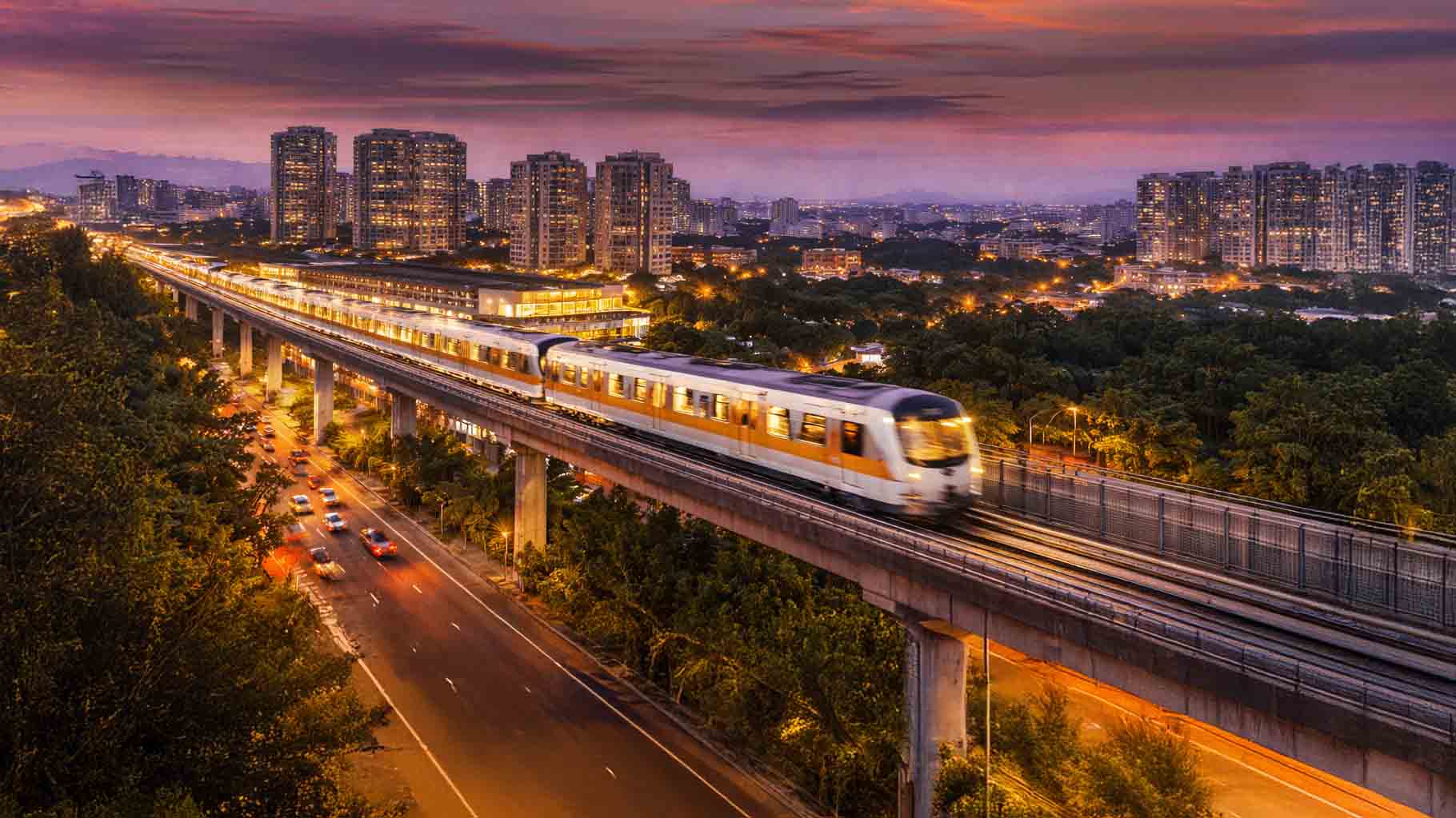
The timeline has shifted and so has the opportunity to enter Baner and Balewadi before metro connectivity is fully priced in. The confirmation is now official. Pune Metro Line 3 connecting Hinjewadi to Shivajinagar, will begin operations around March 2026, instead of the originally indicated December 2025 timeline.
For daily commuters, this delay is inconvenient.
For informed real estate investors, it is a rare extension of a closing window.
At 3 Works Properties, we track what we call infrastructure-led repricing, the sharp but predictable adjustment in property values that occurs after a transit system becomes operational, not while it is under construction. Once trains start running, anticipation converts into habitual usage. That shift is where pricing behaviour changes.
Why Metro Delays Often Create the Best Entry Points
Across Indian cities, including Pune’s own Vanaz–Ramwadi Metro corridor, a consistent pattern has emerged:
- Prices move gradually during construction
- Buyers discount timelines, noise, and execution risk
- The real repricing begins after operations stabilise, not on announcement day
By early 2026, much of Baner and Balewadi is still priced with a “project execution discount”. That discount disappears quickly once trial runs conclude and commuter behaviour sets in. This delay effectively gives serious buyers one final negotiation cycle before connectivity becomes a lived reality.
Reading the Metro Map Like an Investor
Most people view the Metro Line 3 map as a list of stations. Investors should view it as a value corridor with distinct demand profiles.
Hinjewadi: The Rental Anchor
This zone remains yield-driven. Demand here is largely tenant-led, supported by IT employment density. Capital values grow steadily, but rental absorption is the real strength.
Baner–Balewadi: The Lifestyle Multiplier
This is where Metro connectivity intersects with high-street retail, restaurants, and premium housing. Historically, this combination produces both capital appreciation and stronger tenant quality, not just occupancy.
Shivajinagar: The Network Connector
As an interchange and CBD-access node, this end of the line benefits from citywide connectivity. However, pricing here already reflects maturity more than upside.
For 2026 buyers, Baner and Balewadi remain the most mispriced relative to future convenience.
The 500-Metre Reality (What the Data Actually Shows)
Operational data from Pune’s existing metro stretch shows a clear trend: Homes within comfortable walking distance of stations outperform those that rely on feeder transport.
The difference isn’t marginal, it reflects:
- Daily time savings
- Predictable commute routines
- Higher tenant stickiness
However, the relationship is not linear. Properties directly abutting metro tracks or arterial roads often underperform due to noise, visual intrusion, and access congestion. This creates a sweet spot, not a blanket rule.
Why the March 2026 Timeline Improves ROI Math
The revised schedule aligns unusually well with buyer and tenant cycles.
Early 2026 (January–February):
Developers and sellers are still absorbing “delay sentiment,” creating room for negotiation—especially on inventory near future stations.
March–April 2026:
Metro trials conclude, possession cycles align, and perception shifts from uncertainty to usability.
May–June 2026:
Tenant demand picks up with the new financial year. “Walk-to-metro” homes see faster closures and better tenant profiles, particularly among professionals relocating within West Pune.
This sequencing improves both rental velocity and capital visibility, a rare alignment.
The 3 Works Perspective: Precision Matters More Than Proximity
Not every property near the Red Line is a good investment. In fact, some of the weakest performers post-metro are:
- Lower floors facing main roads
- Apartments directly adjacent to elevated tracks
- Projects with compromised access during peak hours
Our consistent recommendation:
Look for what we call “Second-Row Assets”, projects located roughly 150–300 metres away from stations, shielded from noise and traffic, yet fully walkable. These assets benefit from connectivity without sacrificing liveability, which is what long-term tenants and end-users actually pay for.
Final Takeaway
Metro Line 3’s delay is not a setback for buyers, it is the market’s last pause before repricing. Once operations stabilise in 2026, Baner and Balewadi will stop being evaluated as “upcoming connectivity zones” and start being treated as fully integrated urban hubs. At that point, negotiation power shifts decisively.
We have identified a small set of second-row residential projects in Baner and Balewadi that remain undervalued relative to their post-metro potential. If you are considering an entry before connectivity is fully priced in, now is the moment to act.
Schedule a confidential consultation or site visit with 3 Works Properties, before the ribbon cutting does the pricing for you.
Updated
Views
13
Tags
- Infrastructure
3 Works Properties
Editorial team · Investment Insights
Market notes, buying guides, and location stories from 3 Works Properties.
Journal
Related articles
 Investment Insights5 min read
Pune Ring Road 2026: Which Micro-Markets are Positioned for the Next Phase of Growth?
A realistic look at how Pune’s largest infrastructure project could reshape real estate demand over the next 3–5 years For most of the past decade, Pune’s real estate growth followed a familiar pattern. Demand concentrated around established micro-markets such as Koregaon Park and Kalyani Nagar before expanding outward into employment-driven corridors like Hinjewadi and Kharadi. The Pune Ring Road introduces a different dynamic. Instead of strengthening the city centre, it redistributes accessib
Read more Investment Insights5 min read
Why Rental Yield Alone Is Misleading in Pune Real Estate
A higher rental percentage does not always translate into a better long-term investment One of the most common questions investors ask in Pune real estate is: “Which area gives the highest rental yield?” At first glance, the logic sounds reasonable. Higher rent compared to property value should mean better returns. But in real estate, especially in Pune’s evolving 2026 market, rental yield alone is an incomplete metric. In many cases, it can even be misleading. At 3 Works Properties, we increasi
Read more Investment Insights3 min read
Unlock Your Key to Financial Freedom with Pune’s Real Estate Market
In a world filled with endless investment options, it can be overwhelming to determine where to put your hard-earned money for the best returns. But what if we told you that there is an opportunity right here in Pune that could potentially be your ticket to long-term prosperity?
Read more
Explore