Journal
Mundhwa or "KP Annexe"? Decoding the Price & Lifestyle Reality for 2026 Buyers
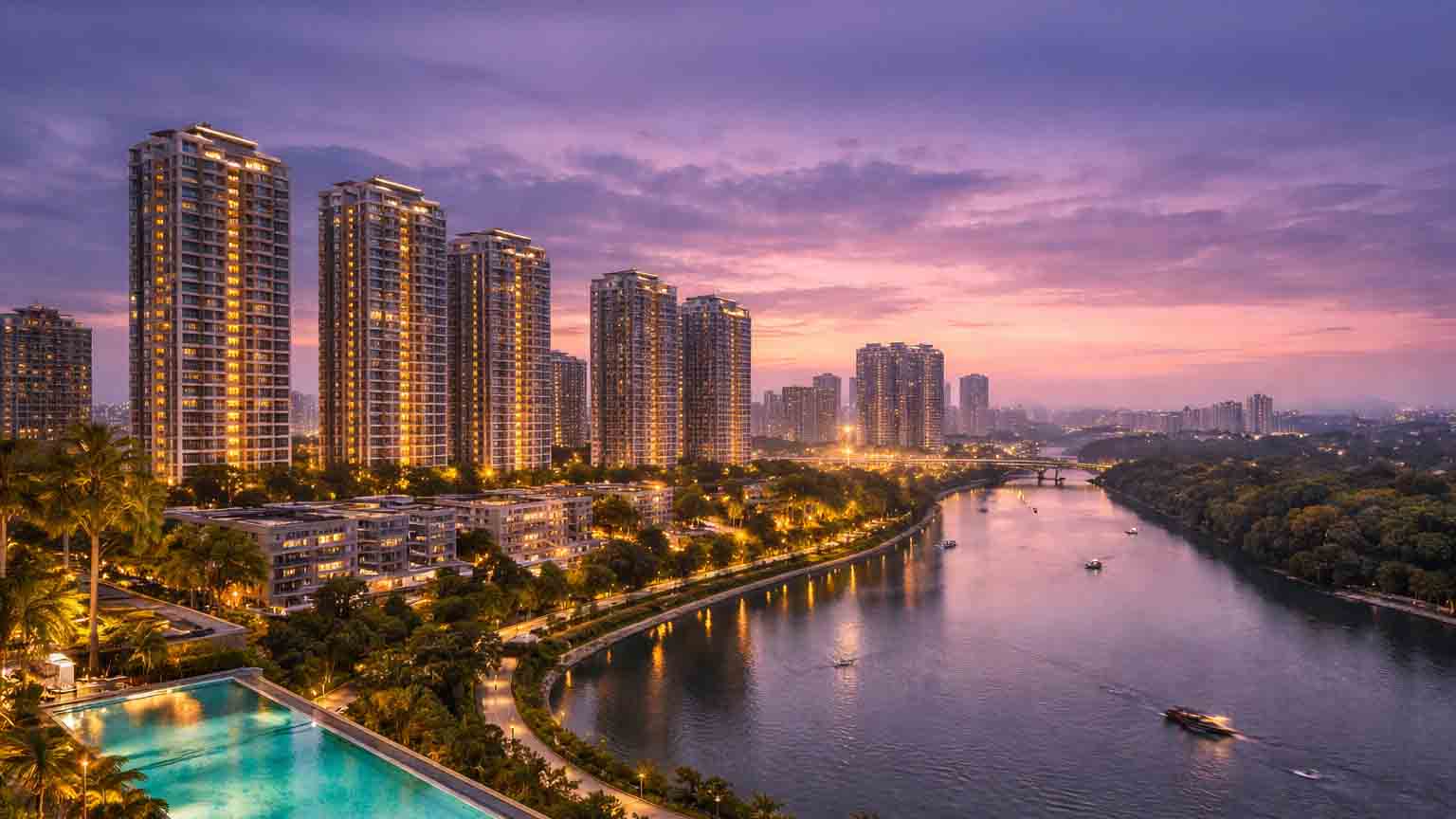
Mundhwa is evolving from an overlooked area to a compelling luxury choice in Pune. With high-quality residential projects, enhanced connectivity, and a strategic location, it offers a unique value proposition distinct from Koregaon...
- Published
- Category
- Micro-Market Analysis
- Reading time
- 4 min 4 min read
Contents06
Is Mundhwa still an industrial spillover or has it quietly become one of Pune’s most rational luxury decisions?
For years, Mundhwa was viewed as a compromise, chosen when Koregaon Park felt financially out of reach. Same geography, different perception. As we move through 2026, that perception deserves a reset.
Mundhwa has not turned into Koregaon Park and that’s precisely why it has become interesting. The emergence of high-quality residential developments, improved road connectivity, and its positioning between KP, Kharadi, and Magarpatta have reshaped how end-users and investors are evaluating the corridor.
The question today is no longer “Is Mundhwa the new KP?”
It is “Does Mundhwa offer better value for how people actually live in 2026?”
1. The Price Reality: Understanding the Arbitrage (Not the Hype)
Let’s start with what most buyers notice first, pricing. In prime residential lanes of Koregaon Park, well-maintained Grade-A apartments typically trade in the ₹18,000–₹22,000+ per sq. ft. range in 2026, depending on age, density, and redevelopment potential.
In Mundhwa, comparable new-age specifications, larger floor plates, newer construction, and modern amenities, generally sit between ₹10,000–₹14,000 per sq. ft.. This is a meaningful gap, but not a like-for-like comparison.
What you’re paying for in KP is:
- Extremely limited supply
- Legacy planning and green cover
- A globally recognised address
What Mundhwa offers instead is:
- Larger usable space
- Newer construction standards
- Lifestyle-driven amenities
2026 takeaway:
For end-users, the gap is narrowing in experience, even if it remains wide in price. The practical difference between living in Mundhwa and accessing KP’s social infrastructure is now measured in minutes, not trade-offs.
2. Vertical Living vs Heritage Scale
One of the clearest differences between the two micro-markets is how they grow vertically. Koregaon Park remains height-restricted due to heritage zoning and its existing urban fabric. Most residential buildings are low-rise or mid-rise, prioritising greenery and privacy over views. Mundhwa has taken a different route.
New residential developments here are comfortable with height, scale, and skyline visibility. Taller buildings allow:
- River-facing or city-facing views
- Lower ground coverage
- More amenity space within the project
This doesn’t make one better than the other, it simply reflects different lifestyle preferences. For buyers who value elevation, light, and openness, Mundhwa often delivers something KP structurally cannot.
3. Connectivity: Why Mundhwa Has Become a Pivot Zone
Mundhwa’s biggest transformation has come from connectivity, not branding. Its position between:
- Kharadi (EON IT Park)
- Magarpatta
- Viman Nagar
- Koregaon Park
has turned it into a genuine midpoint rather than an overflow location. For many working households in 2026, especially dual-income families with offices in different parts of East Pune, this balance matters more than the prestige of a single address. Mundhwa’s appeal today is logistical, not aspirational.
4. So… Who Should Buy Where in 2026?
This isn’t a better-vs-worse decision. It’s a priority decision. Koregaon Park makes sense if:
- Address value matters more than space efficiency
- You prefer established, low-density neighbourhoods
- Budget flexibility exists, and appreciation is secondary
Mundhwa makes sense if:
- You want newer construction and better layouts
- You value proximity to multiple work hubs
- You prefer amenities and liveability over legacy
Neither choice is “smarter” in isolation. The right choice depends on how you intend to live, and hold the asset.
5. A Note on Project Selection (Why Curation Matters)
Not all of Mundhwa benefits equally from its transformation. High density, poor access roads, or compromised planning can dilute long-term value. This is where selective filtering becomes important.
Among newer developments, projects such as Godrej Skyline, Supreme Towers and 57 Avenue by Panchshil reflect the direction Mundhwa is heading, though even within these, unit selection, orientation, and phase matter more than brand names alone.
At 3 Works Properties, our approach is not to rate markets, but to stress-test livability, access, and long-term relevance at a project and micro-pocket level.
Final Thought
Mundhwa is not Koregaon Park’s replacement. It is its counterbalance. In 2026, that distinction is exactly why Mundhwa deserves to be evaluated on its own merits, quietly, rationally, and without marketing labels.
If you’re trying to see past the “KP Annexe” narrative and understand which Mundhwa pockets genuinely hold long-term value, we can help you cut through the noise. Schedule a curated site visit with 3 Works Properties, focused on livability today and relevance in 2030.
Updated
Views
15
Tags
- Koregaon Park
- Mundhwa
3 Works Properties
Editorial team · Micro-Market Analysis
Market notes, buying guides, and location stories from 3 Works Properties.
Journal
Related articles
 Micro-Market Analysis5 min read
Lullanagar & NIBM Road: South Pune’s Space-First Alternative to Camp Living
When central heritage neighbourhoods run out of room, buyers begin prioritising how they live rather than where the address sits For decades, living around the Cantonment and Camp area defined South Pune’s social centre. The tree cover, club culture, and walkable roads created a lifestyle that felt distinct from the rest of the city. Even today, a home near Camp, Pune carries legacy appeal that few neighbourhoods replicate. However, by 2026 the limitation of mature neighbourhoods has become clea
Read more Micro-Market Analysis4 min read
Kalyani Nagar 2.0: Understanding the Real Value Behind Redevelopment Luxury
As central Pune rebuilds vertically, buyers must distinguish true location value from label-based pricing The evolution of Kalyani Nagar has entered a decisive phase. Independent homes that once defined the neighbourhood are steadily being replaced by mid and high rise residential projects. For many buyers, redevelopment in an established locality appears ideal because it promises modern amenities without sacrificing a proven address. In reality, redevelopment introduces variation. Some projects
Read more Micro-Market Analysis4 min read
Upper Kharadi vs. EON IT Park Radius: Decoding the 2026 Price Gap for Tech Executives
Is the walk-to-work privilege worth the premium, or does a 10-minute drive unlock a better class of living? For senior professionals moving into Pune’s eastern IT corridor, the housing brief sounds straightforward: live as close as possible to EON IT Park or the World Trade Center. For years, this automatically meant central Kharadi within the immediate office radius. In 2026, that logic is changing. The availability of large residential land parcels inside core Kharadi has almost disappeared. M
Read more
Explore