Journal
Upper Kharadi vs. EON IT Park Radius: Decoding the 2026 Price Gap for Tech Executives
Is the walk-to-work privilege worth the premium, or does a 10-minute drive unlock a better class of living? For senior professionals moving into Pune’s eastern IT corridor, the housing brief sounds straightforward: live as close as possible to EON IT Park or the World Trade Center. For years, this automatically meant central Kharadi within the immediate office radius. In 2026, that logic is changing. The availability of large residential land parcels inside core Kharadi has almost disappeared. M
- Published
- Category
- Micro-Market Analysis
- Reading time
- 4 min 4 min read
Contents06
Is the walk-to-work privilege worth the premium, or does a 10-minute drive unlock a better class of living?
For senior professionals moving into Pune’s eastern IT corridor, the housing brief sounds straightforward: live as close as possible to EON IT Park or the World Trade Center. For years, this automatically meant central Kharadi within the immediate office radius. In 2026, that logic is changing.
The availability of large residential land parcels inside core Kharadi has almost disappeared. Most new development now happens through smaller plots or redevelopment-style towers. Meanwhile, developers have shifted towards the Upper Kharadi belt stretching toward Bakori and Wagholi, where integrated gated communities are being planned at a completely different scale.
The result is a real decision for buyers: convenience versus livability. This is not just about distance. It is about what your budget actually buys you.
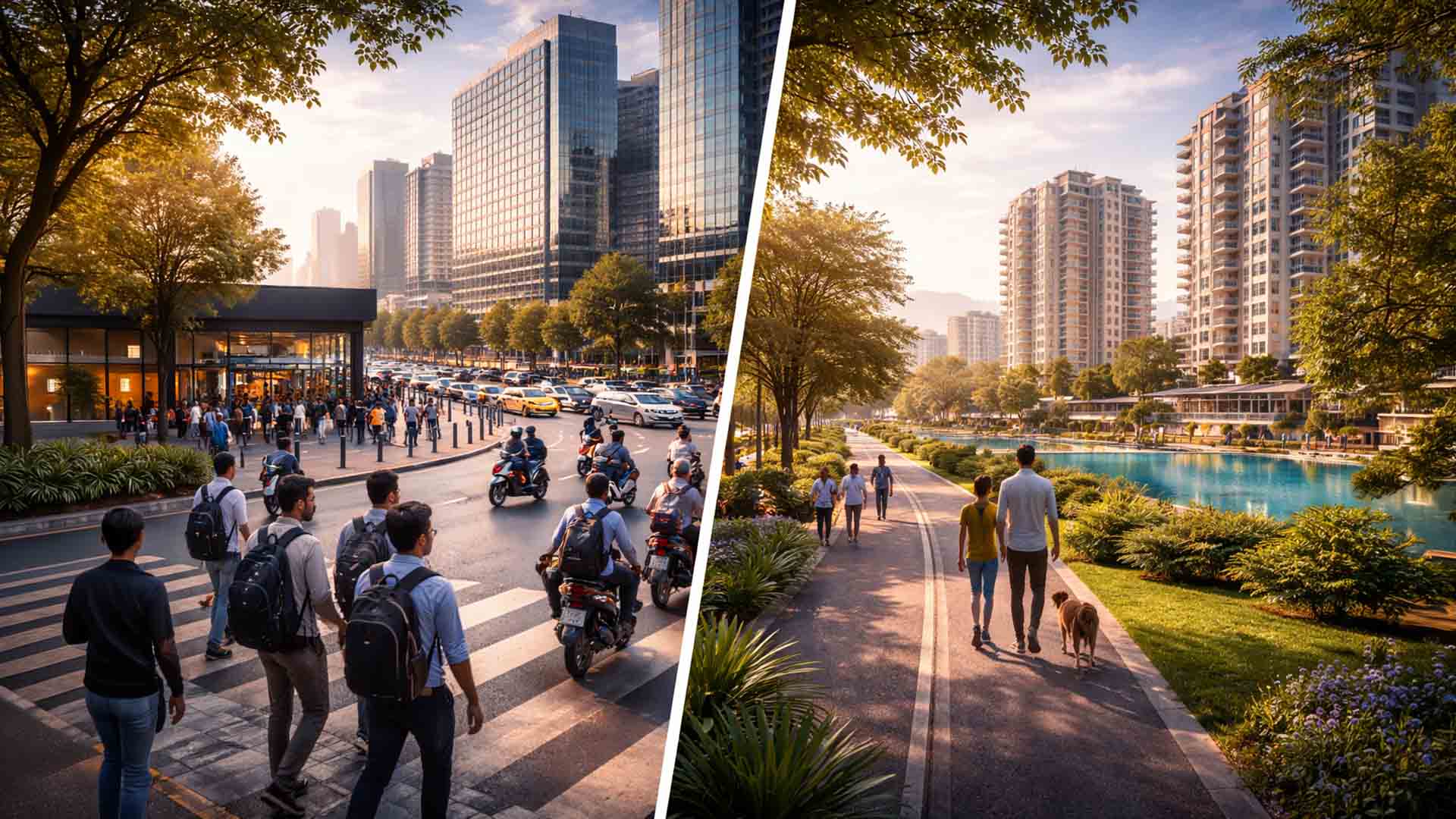
The Zero-Commute Premium: Core Kharadi (EON IT Park Radius)
Living within walking distance of EON IT Park remains the ultimate convenience purchase. For executives with long office hours or global calls, eliminating commute uncertainty has genuine value.
However, scarcity now defines the product.
Because land parcels are small and expensive, most new projects here are vertical and dense. Amenities are stacked onto podium levels, open space is limited, and layouts are optimized for efficiency rather than generosity. You gain access, but you compromise on spatial comfort. As of early 2026, Grade-A residential inventory within the immediate EON and WTC radius typically trades around ₹11,000 to ₹15,000 per sq.ft depending on brand, floor height and road proximity. Premium towers command higher values largely because of their location, not because of land size or campus planning.
Noise and traffic exposure are also part of the trade-off. The Nagar Road corridor, Mundhwa-Kharadi bypass and daily office peak hours mean the area rarely feels residential even late at night. Buyers here are prioritizing time savings over quiet living.
The Space Arbitrage: Upper Kharadi
Upper Kharadi developed because large developers could no longer assemble meaningful land inside the core micro-market. Along the newer DP roads towards Bakori and Wagholi, parcels ranging from 10 to 40 acres became available, enabling true township-style planning. Here, the commute changes from zero minutes to roughly 10–18 minutes depending on office timing. But the residential experience changes dramatically.
Instead of vertical density, projects emphasize horizontal breathing space: central greens, multiple clubhouses, internal roads, and family-scale layouts. The buyer profile shifts from young renters to long-term residents with children, parents, and hybrid work schedules.
Current Grade-A pricing in Upper Kharadi typically ranges between ₹7,500 and ₹11,000 per sq.ft in 2026, creating a noticeable value gap compared to core Kharadi. The difference is not minor, it often translates into an additional bedroom or a proper study.
In practical terms, the same budget buys a fundamentally different home.
What the Price Gap Actually Means in Real Life
For a buyer allocating roughly ₹3.5–4 Cr, central Kharadi usually results in a well-finished but compact 3 BHK designed around proximity. In Upper Kharadi, the same investment commonly moves into a larger 4 or 4.5 BHK within a gated campus environment with significantly more usable space.
This difference has become more relevant after 2023–2025 workplace changes. Many senior tech professionals now work hybrid schedules, meaning homes double as workspaces. A study room, quieter surroundings, and outdoor space are no longer luxuries, they are daily functional requirements.
In other words, the price gap is not just financial. It reflects a shift in lifestyle philosophy.
Infrastructure Is Quietly Supporting the Shift
Several infrastructure developments are reducing the psychological distance between the two zones. The Mundhwa-Kharadi connectivity upgrades, the expansion of DP roads, and future integration with the Ring Road network are improving travel predictability from Upper Kharadi far more than most buyers assume.
Importantly, peak hour delays today are often concentrated inside core Kharadi itself rather than on the approach roads. Many residents now spend similar time exiting central Kharadi as they do driving from Upper Kharadi to their office gates.
This has subtly reduced the real advantage of the walk-to-work premium.
Which One Actually Makes Sense?
Buyers who need guaranteed daily presence at the office and operate on fixed schedules often still prefer core Kharadi. For them, reliability outweighs space.
But professionals following hybrid routines usually end up valuing their home environment more than shaving ten minutes off commute time. For this group, Upper Kharadi tends to offer better long-term satisfaction because the home continues to add value even when work patterns change.
The choice therefore becomes less about geography and more about lifestyle rhythm.
Final Thought
In 2026, the eastern corridor is no longer a single micro-market. It is a spectrum between access and comfort. The premium inside the EON radius buys certainty. The discount in Upper Kharadi buys quality of living.
Neither is universally better. The right decision depends on whether your home supports your work, or your work defines your home. Let 3 Works help you decide better.
Updated
Views
17
3 Works Properties
Editorial team · Micro-Market Analysis
Market notes, buying guides, and location stories from 3 Works Properties.
Journal
Related articles
 Micro-Market Analysis5 min read
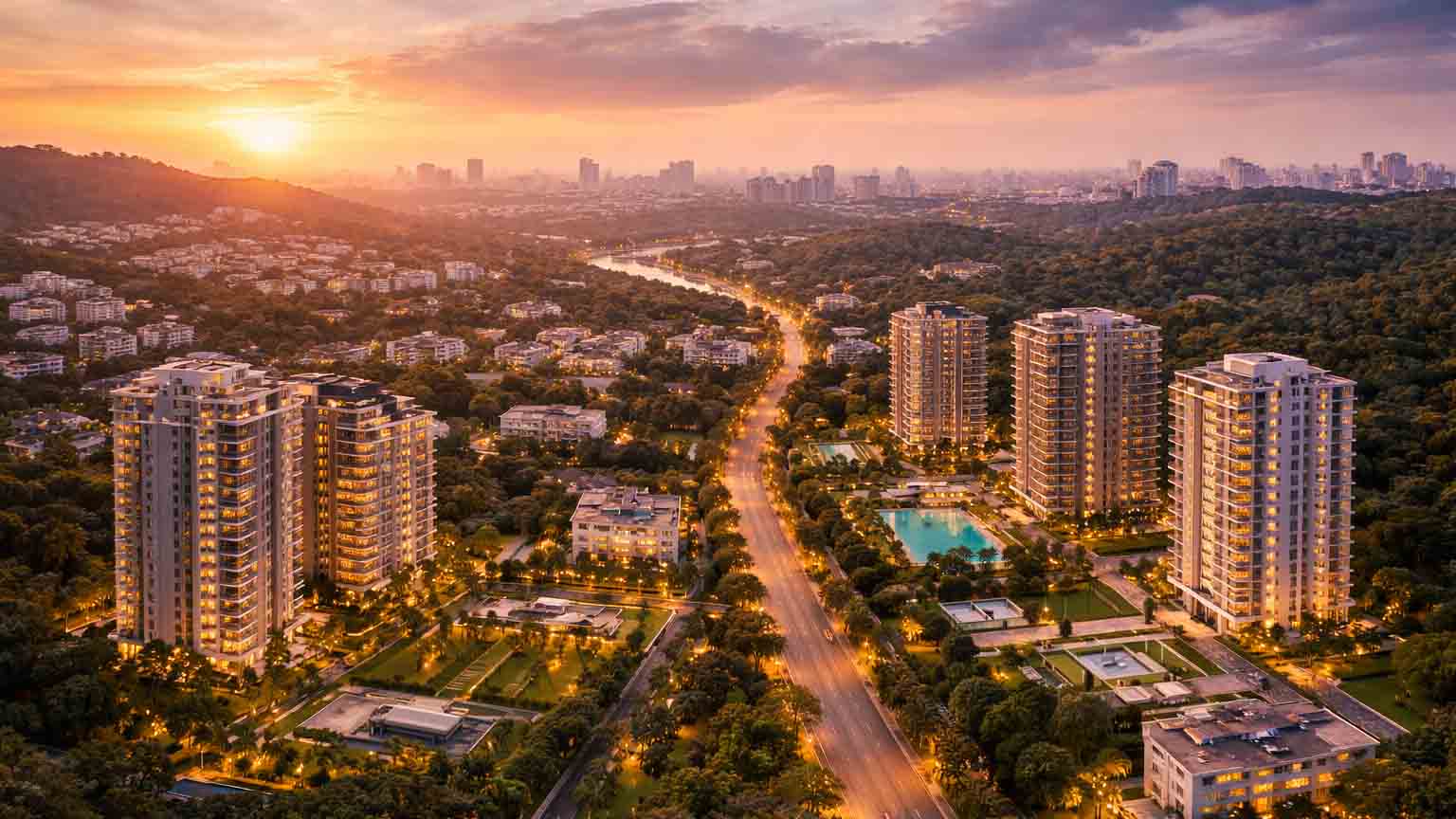
Lullanagar & NIBM Road: South Pune’s Space-First Alternative to Camp Living
When central heritage neighbourhoods run out of room, buyers begin prioritising how they live rather than where the address sits For decades, living around the Cantonment and Camp area defined South Pune’s social centre. The tree cover, club culture, and walkable roads created a lifestyle that felt distinct from the rest of the city. Even today, a home near Camp, Pune carries legacy appeal that few neighbourhoods replicate. However, by 2026 the limitation of mature neighbourhoods has become clea
Read more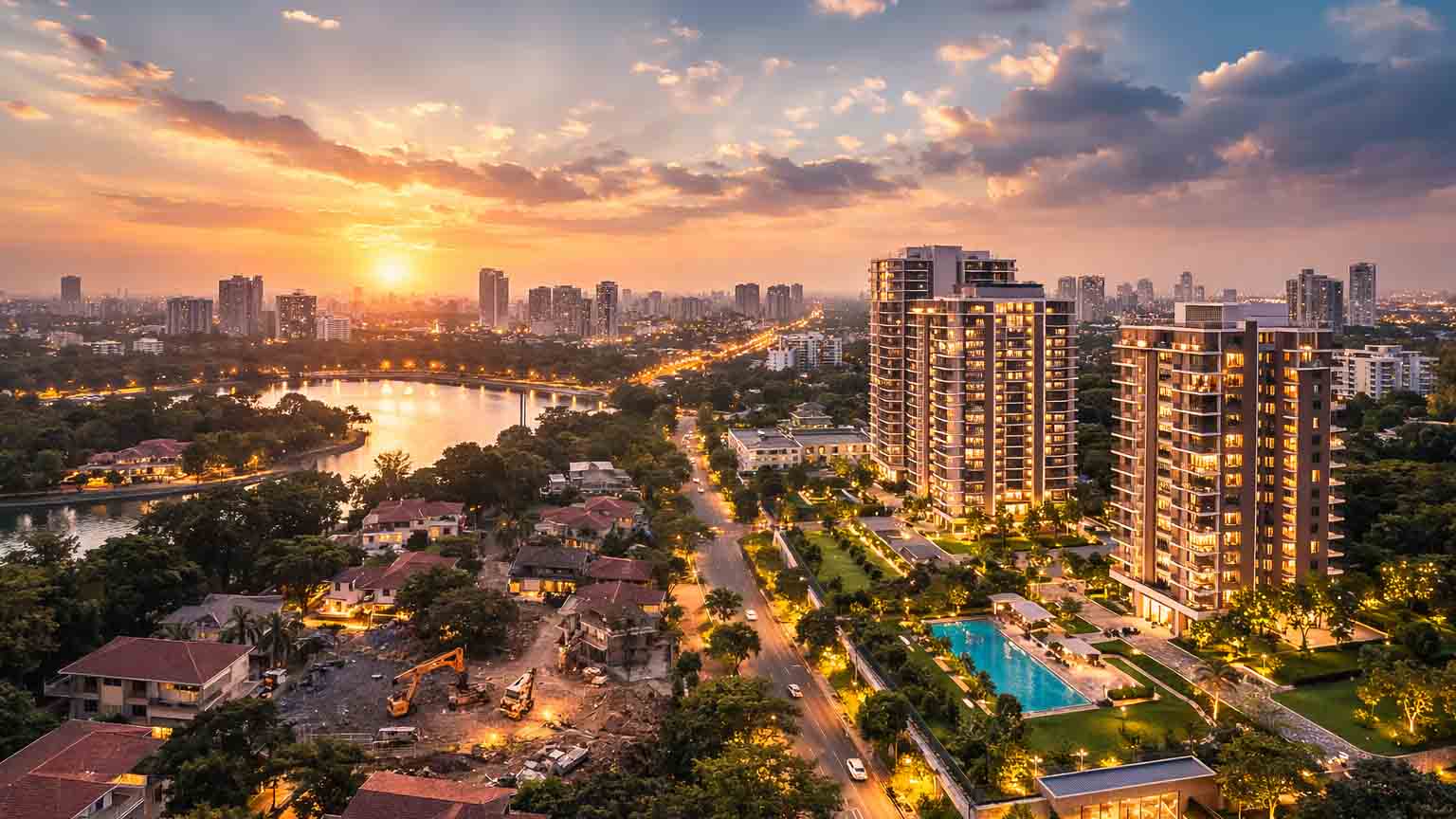 Micro-Market Analysis4 min read
Kalyani Nagar 2.0: Understanding the Real Value Behind Redevelopment Luxury
As central Pune rebuilds vertically, buyers must distinguish true location value from label-based pricing The evolution of Kalyani Nagar has entered a decisive phase. Independent homes that once defined the neighbourhood are steadily being replaced by mid and high rise residential projects. For many buyers, redevelopment in an established locality appears ideal because it promises modern amenities without sacrificing a proven address. In reality, redevelopment introduces variation. Some projects
Read more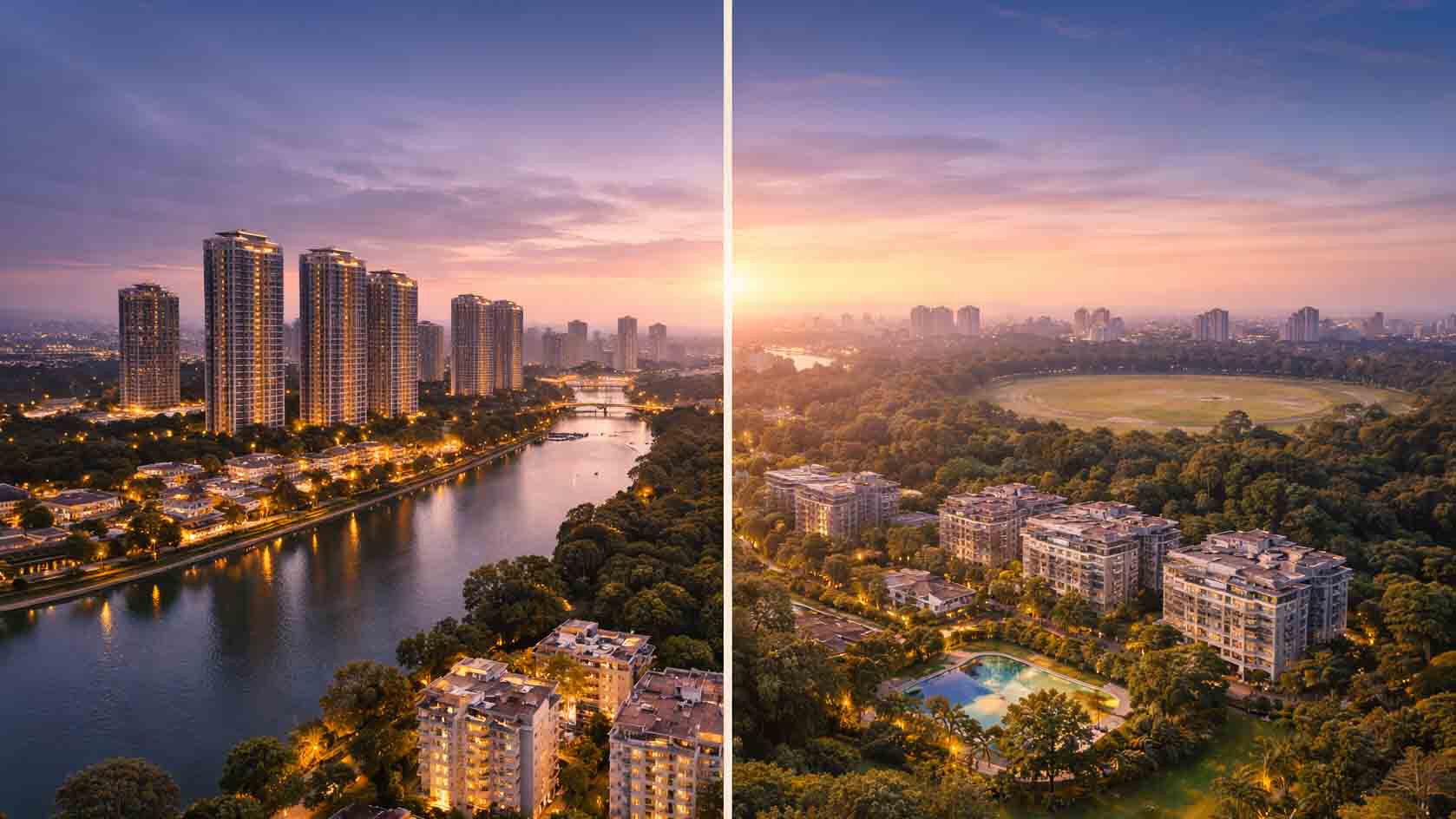 Micro-Market Analysis4 min read
Sopan Baug vs. Koregaon Park: Choosing Between Pune’s Greenest Luxury Addresses
For decades, Koregaon Park has defined premium living in Pune. Its leafy lanes, international dining culture, and long-standing social reputation created an neighbourhood that symbolised arrival as much as residence. But cities evolve, and in 2026 one of the biggest drivers of buyer decision-making is no longer prestige alone, it is livability under pressure.
Read more
Explore